JOHN 1:43-51
43The next day Jesus decided to go to Galilee. He found Philip and said to him, “Follow me.” 44Now Philip was from Bethsaida, the city of Andrew and Peter. 45Philip found Nathanael and said to him, “We have found him about whom Moses in the law and also the prophets wrote, Jesus son of Joseph from Nazareth.” 46Nathanael said to him, “Can anything good come out of Nazareth?” Philip said to him, “Come and see.” 47When Jesus saw Nathanael coming toward him, he said of him, “Here is truly an Israelite in whom there is no deceit!” 48Nathanael asked him, “Where did you come to know me?” Jesus answered, “I saw you under the fig tree before Philip called you.” 49Nathanael replied, “Rabbi, you are the Son of God! You are the King of Israel!” 50Jesus answered, “Do you believe because I told you that I saw you under the fig tree? You will see greater things than these.” 51And he said to him, “Very truly, I tell you, you will see heaven opened and the angels of God ascending and descending upon the Son of Man.”
It’s usually great. I get in to these insane and slightly disgusting conversations about ingrown toenails and sciatica and the brilliance of the Bush presidencies.
And I always end up getting in to these theological discussions with one-tooth-Bill. He claims to take everything in the Bible literally, and spends most of his time picketing - I mean praying - at the Planned Parenthood downtown. When he’s not telling me that he thinks I’m getting fat, I’m usually nodding my head, trying to listen, trying not to say something that will reveal how very little we have in common.
But this Thursday was just over the top. After his updates about his newest anti-abortion sign, and a reminder about his literal biblical hermeneutic, he dove in. He was ranting about how he can’t trust anyone, and about how he won’t talk to certain people here because of their lifestyle and about how all he needs is God, and about how the rest of us are going to turn into a pillar of salt because we are living in a modern day Sodom and Gomorrah, what with all the Gays and the Tattoo Parlors on the Southside.
I just stood there.
I stood there and I thought about how very wrong he was, and about how very lonely he must be, and about how he’s really hungry and is going to eat a meal provided by two tattooed gay men.
He wears this long black trench coat. And another coat underneath. And under that is a maroon hoodie. And I wonder, whats behind all those layers of unkempt cotton and leather and polyester?
What’s really there? Behind his one tooth and the platitudes and the prejudice and the serious need for a shower and a laundromat?
He’s my Nazareth. That backwards town full of hostile folks who are easily threatened.
Nazareth in Jesus’ day is an unknown town full of unknown people. A nothing town. It’s not mentioned once in the Old Testament. It’s the backwoods. It’s out in the sticks. Farthest from the farthest suburb. It’s where there’s no public transportation or trash collection or internet access. Where they drink fracked well water. It’s where kids drop out of school in the eighth grade to work the fields or cook meth.
And here is Bill, what I envision, with my sinful prejudice eyes, as my own personal Nazareth.
Ugh. What good can come out of Nazareth?
What’s the point of all this anyway? Is this anything? This work that I’m doing? This thing that we’re doing called “church”?
Is this anything?
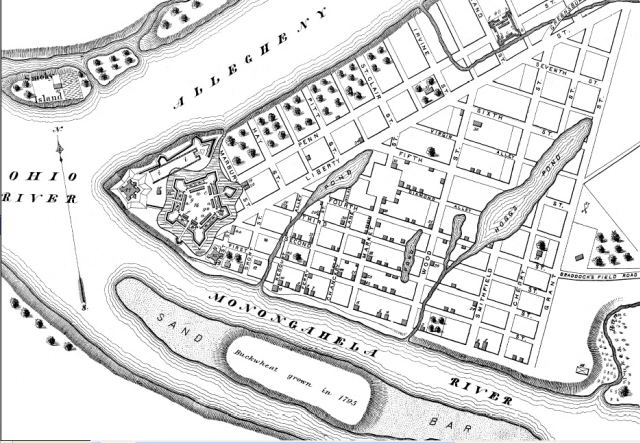
Can anything good come out of Nazareth? Or Nigeria or Charlie Hebdo or Isis or Iran or one-toothed Bill? Or Pittsburgh?
So all week I’ve been slumped beneath my own fig tree. Waiting for the Messiah to come, to look like a king or a prince or at least the next Neo-liberal-conservationist who invests in public schools and has really great hair. I’m waiting all alone under this tree for the Messiah - but only the one who eats locally grown organic kale and drives a Prius and makes a living fashioning beautiful teak furniture from trees that he’s sustainably grown in his back yard while entertaining young children with his arts studio on his front porch. I’m all alone, checking my watch for the fifty-seventh time, waiting for the Messiah to come and do and be and look exactly what I expect.
And I drag my fig tree with me to another night of feeding hungry and ungrateful people. I avoid eye contact with one-tooth-Bill, because he might shanghai me into another conversation that makes me want to give up on humanity all together.
But maybe it’s that damn fig tree that makes me remember that for homeless folks - the one thing they miss - it’s that no one looks them in the eye.
No one really sees them.
We might see their cardboard signs and their stained clothes. We might see their bruised knuckles and their callused hands. We see their laziness and drunkenness and poor choices.
No one really sees them.
We might see their cardboard signs and their stained clothes. We might see their bruised knuckles and their callused hands. We see their laziness and drunkenness and poor choices.
But we don’t see them.
We walk by or over them. But we don’t look in their eyes.
This isn’t anything, we think. And we keep walking.
Or. This is too much. and we keep walking.
I can’t handle one-tooth-Bill’s ranting and hatred. So I come up with an excuse, and drag my fig tree along with me - ‘cause I know, if I just wait a little longer, my Messiah will show up any moment now.
In the meantime, I wash the dishes and wipe down the tables and try to ignore one-tooth-Bill's ranting, and I wonder to myself, “Is this anything?” Can anything good come out of this? Where is this Messiah we’ve been waiting for?
I’ve got Nazareth-eyes.
Eyes that can only see what I expect, eyes that can only register what I think I want. All the rest becomes invisible.
And then I feel invisible.
I’ve got Nazareth-eyes.
Eyes that can only see what I expect, eyes that can only register what I think I want. All the rest becomes invisible.
And then I feel invisible.
So often I feel so invisible in this work. You work your ass off to feed people, to give them a warm meal, a place to rest, a safe community to belong to, and they scarf down their meal and drop their dirty dishes in the bin and put on their coats and jump back on the bus. Gone. And then they come back, hungry all over again.
Or you spend twenty hours thinking about a sermon, and in fourteen minutes it’s over, and people leave with balanced checkbooks and grocery lists and coffers full of daydreams.
And I think that’s where all the “Is this anything?” comes from.
It comes from our feelings of invisibility.
Isn’t that why we’re so nasty and mean and judgmental - or passive aggressive - on the internet and in our cars and waiting in line at the grocery store?
Our doubt about ourselves, about this whole God thing, comes from not feeling seen and heard and loved.
Our ugliness and Nazareth-eyes comes from this feeling that no one really knows us, no one really sees us.
And then there’s Jesus.
Jesus who sees.
He really sees.
That’s what I think astounds Nathanael.
It’s not that Jesus is clairvoyant or a miracle worker or a mountain mover.
So far in the Gospel of John, Jesus hasn’t done a THING to merit being called the Son of Man, the Messiah, the Anointed One.
He’s been baptized.
He’s met some people.
He’s traveled around.
There are no parapets, no trumpets resounding, no parade of elephants and soldiers and dancers and tapestries and sabers.
There are no easy solutions for wars and violence and global warming and racism.
There’s just dust and sandals and fig trees. There are simply two eyes that can truly see things as they truly are.
“How did you know me, Jesus?” Nathanael asks.
"I saw you under the fig tree."
But Nathanael is seen. Is truly seen.
And because Nathanael is truly seen, he gets it. Something registers. Something clicks. Nathanael doesn’t need floods or pillars of salt or resurrections or political insurrections. He just needs to be seen.
Nathanael is seen - and that’s enough.
Nathanael is seen - and that’s enough.
“Rabbi! You are truly the Son of God!” he says.
It’s enough.
It’s not just anything. It is something.
It’s everything.
There’s no miracle healing. There’s no prophetic reading of scripture. There’s no forefathers or lineage or parting of the heavens or multiplying bread or magic storm-stopping. There’s no miraculous resurrection or virgin birth.
There’s just an encounter. A true seeing of another human being.
And that’s all it takes.
Jesus sees Nathanael - truly sees him for all that he is. He sees the holy and the good and the hopeful and the spirit in him. That’s the miracle. That’s whats so astonishing.
For Jesus, a fig tree is an axis mundi.
This is just a fancy term for what anthropologist Mircea Eliade calls a point that humans acknowledge as a “thin space” - a place where the division between heaven and earth dissolves, a place where God enters in, a holy place. An axis mundi is a place where the heavens are opened and the angels are ascending and descending upon the Son of Man.”
But for Jesus, the heavens ARE opened and the angels of God ARE ascending and descending upon the Son of Man right there by the fig tree. Everywhere Jesus looks is sacred, is the place where the Spirit is indwelling.
For Jesus, the boring ol’ fig tree on his way to Galilee is the place where true seeing happens, where an encounter with the divine occurs, where the heavens break in and God is here on earth.
It’s a special kind of seeing that Jesus has. And as he truly sees Nathanael, Nathanael is able to see it too.
And so, Jesus promises, you’re going to see a lot more fig trees. You think this is a big deal? My seeing you? You’re going to see everywhere. You’re going to find fig trees all over the place. And it’ll be like heaven has torn open, and the separation between this world and the next has dissolved, and you’ll see Jesus in all the places you never thought good would come from -- including in some angry lonely guy with one tooth who rants about how he he’s glad he won’t have to spend eternity with all those tattooed gay people.
Can anything good come from Nazareth? Can anything good come from one-tooth-Bill?
Come and See.
Come and see and get yourself seen.
We’re all looking for the heavens to open and the seas to calm and the winning lottery ticket.
And we get a fig tree.
A park bench.
A cup of coffee and an uncomfortable conversation with One-Tooth-Bill.
A highway overpass and a couple of dirty sleeping bags.
We get midnight panic attacks and toddler temper tantrums and folks cutting us off in traffic. We get missed appointments and broken relationships and unanswered questions.
But with the eyes of Jesus, they all become fig trees. They become axis mundis. They become places where the heavens can be torn open and the angels are descending and ascending upon the Son of Man. A place where you are truly seen. And a place where you can truly see.
Nazareth becomes the birth place of the Son of Man.
The backwards stix of a town becomes the root of the tree where God’s grace enters in, where the division between heaven and earth dissolves, and where the one who truly sees and knows and loves us comes from.
Come and See.
Come and See.
Come. And be seen.
Thanks be to God.