image from http://www.growingyourbaby.com/2012/05/23/tiny-baby-born-weighing-9ozs-almost-ready-to-go-home/micro-preemie-kenna-moore-weighing-1-pound/
Luke 15:11-32
11 Then Jesus* said, ‘There was a man who had two sons. 12The younger of them said to his father, “Father, give me the share of the property that will belong to me.” So he divided his property between them. 13A few days later the younger son gathered all he had and travelled to a distant country, and there he squandered his property in dissolute living. 14When he had spent everything, a severe famine took place throughout that country, and he began to be in need. 15So he went and hired himself out to one of the citizens of that country, who sent him to his fields to feed the pigs. 16He would gladly have filled himself with*the pods that the pigs were eating; and no one gave him anything. 17But when he came to himself he said, “How many of my father’s hired hands have bread enough and to spare, but here I am dying of hunger! 18I will get up and go to my father, and I will say to him, ‘Father, I have sinned against heaven and before you; 19I am no longer worthy to be called your son; treat me like one of your hired hands.’ ” 20So he set off and went to his father. But while he was still far off, his father saw him and was filled with compassion; he ran and put his arms around him and kissed him. 21Then the son said to him, “Father, I have sinned against heaven and before you; I am no longer worthy to be called your son.”*22But the father said to his slaves, “Quickly, bring out a robe—the best one—and put it on him; put a ring on his finger and sandals on his feet.23And get the fatted calf and kill it, and let us eat and celebrate; 24for this son of mine was dead and is alive again; he was lost and is found!” And they began to celebrate.
25 ‘Now his elder son was in the field; and when he came and approached the house, he heard music and dancing. 26He called one of the slaves and asked what was going on. 27He replied, “Your brother has come, and your father has killed the fatted calf, because he has got him back safe and sound.” 28Then he became angry and refused to go in. His father came out and began to plead with him. 29But he answered his father, “Listen! For all these years I have been working like a slave for you, and I have never disobeyed your command; yet you have never given me even a young goat so that I might celebrate with my friends.30But when this son of yours came back, who has devoured your property with prostitutes, you killed the fatted calf for him!” 31Then the father* said to him, “Son, you are always with me, and all that is mine is yours. 32But we had to celebrate and rejoice, because this brother of yours was dead and has come to life; he was lost and has been found.” ’
At 28 weeks pregnant, I have officially compiled a list of things NOT to say to pregnant women.
So here are a few:
- Are you sure you’re not carrying twins? (YES, my doctor, my ultrasound technician and I are all sure it’s just ONE baby in there. Trust us.)
- You’re huge! You look like you’re gonna pop! (Um, I have a lot farther to go!)
- Has your doctor told you to go on a diet yet?
- You don’t look as fat today as you did last week. (Well, that’s helpful...)
- You need to put on more clothes; you need to hide that belly. (This belly ain’t goin’ away anytime soon...!)
- You know, that belly isn’t yours anymore... (Then she proceeds to reach across the counter to rub my stomach!)
- Stop working! What are you doing here? You really should go home. (I’m pregnant, not sick! I’ll never be this strong again in my life!)
- You’re having another boy? Oh, well, I guess you’ll be ok.
- Whoop, you’re getting bigger! (well, duh, that’s kinda the point...)
Some people, though, have actually said some pretty helpful/nice things:
- You’re looking really good
- You look healthy
- Can we bring you a meal when the baby comes?
- Do you need any supplies?
- How can we help?
It’s that “How can we help” that means the most to me, because I’m once again reminded that we can’t do this alone. Raising a child is tough, exhausting work, and it really does take a village.
But the thing is, I don’t think we ever “grow up” to the point where we stop needing each other.
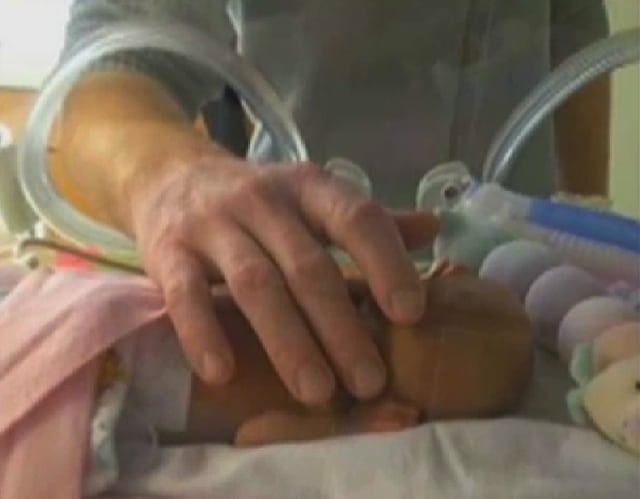
If my son were born today, at 28 weeks, he’d be considered “viable.” Through the miracle of modern technology, he has a good chance that he’d survive. He’d be one of those “micro-preemies,” maybe 2 pounds, and rushed off to the NICU as soon as he came out. But he would need a lot of help. Due to underdeveloped lungs, he’d need to be on a ventilator. Because he doesn’t have enough body fat, he wouldn’t be able to regulate his own temperature, and so would be put in an incubator. He’d have an underdeveloped “suck” reflex, and so would have to be fed with a feeding tube. Due to his underdeveloped eyes, he’d be too sensitive to light, and so would need to wear patches over them. He’d have to stay in the hospital for at least twelve more weeks.
But, with a lot of help, A LOT of intervention, he’d likely survive. But not without the doctors and the nurses and the technology and the parents, and the prayers and the community who loves him surrounding him and supporting him.
But not much will change once he’s born, really. Sure, he’ll be able to breathe on his own, and he’ll be able to swallow, and his eyes won’t be so sensitive to light, but he’s still going to need a lot of help. He’ll need to be fed, cleaned, to have his diapers changed, held, comforted, and loved. He’ll need lots and lots of love. And not just from me, his mom, but also his dad and his grandmas and grandpas and his church and his teachers. He’s going to need lots and lots of help from others.
It’s so obvious when we look at an infant to see how much we rely on each other. But when we get older, we buy into this illusion that we can do it all, all by ourselves. We start to think that we are independent and can solve all of our own problems. We start to think that we’re weak if we ask someone for help. Or, we’ve been hurt so often by others, we start to think that other people are only out there to take advantage of us, to hurt us, and so we never let anyone in.
This is where our story of the two brothers comes in.
Jesus, surrounded by the rejected in his society - the drug addicts, the prostitutes, the mentally ill, the poor - is telling stories. And the Pharisees, the so-called “people who have it all together” criticize him. Why waste your time on “these” people? On the wasters and the failures and the lost?
In response, Jesus tells them this story:
There once was a man with two sons.
The younger son comes to the man and says, “Dad, I really want to party and play and not do any more work. Really, I just wish you were dead so that I could get my inheritance now, and not have to worry about working anymore. I’d rather have the money than be your son anymore.”
For strange, unknown reasons, the father gives him the money, his inheritance, early.
And what does this young son do with the cash? He wastes it. He spends it on booze and drugs and prostitutes, until there’s nothing left. And now he’s lost and hungry and far away from home.
He’s so lost and hungry and far away from home, in fact, that he goes a step further in rejecting who he is. He starts to work at a pig farm. Now for Jews at this time, this is as low as you can go. In fact, for the Jewish community, it was better to die than to eat or even touch a pig. But here he is, at a pig farm, so hungry that he wishes he could eat the food the pigs eat. And no one is around to help him.
The kid has hit bottom.
And then, the text says, “he comes to himself.” He realizes who he is. Who he really is. He is not a drug addict or a prostitute or an alcoholic. He’s his father’s son. And yet. He still doesn’t get what that means - He decides that if he just goes back to his father, maybe he could be a servant - at least that’s better than being covered in pig slop and sleeping in the fields.
So he heads home. He finally realizes that he can’t do this all alone. He needs help.
And he’s afraid and ashamed and embarrassed and nervous. Imagine that long walk home. Imagine what is going on in his mind as he prepares to confess his failures to his father.
And then imagine his face, imagine his emotions, as he sees his father, running towards him, hiking up his fancy robes, slipping through muddy fields, out of breath, until he finds him, and kisses him, embraces him, puts his coat around him, his ring on his son’s finger, his shoes on his son’s feet. Imagine that astonishing scene.
The father sees his lost son again, and throws him a party.
But this is still the story of two sons. I wish it were as easy as a lost son returning home and being welcomed with a party. But it’s not. There are people who have been hurt by what the son has done. People who are angry. People who don’t understand. People who are not yet ready to forgive.
This is the case for the elder son.
He’s done everything right. He’s followed all the rules. He’s done what he is supposed to do. But it’s his reckless, drunk brother who gets the party. What gives?
Like the the younger son, the elder son thinks he can do it all all by himself. For all of these years, he’s done the work he’s supposed to do. He’s obeyed the commands and been responsible for himself. No, he hasn’t squandered his fortune, but he has tried to do it all on his own. And because of that, he doesn’t understand forgiveness. He doesn’t understand that he, too, needs others.
But the father embraces this son, too. He calls him, “my dearest child.” And he tells this son that everything the father has is his.
The father invites this son, too, into the party, into the community, into the family of folks who need each other in order to survive.
The father embraces both of the sons, not because they’re perfect or because they have it all together, but because it is exactly the opposite. The father embraces them because they need to be embraced. They need each other. They need to be invited to the party and to be re-instituted into the community.
But the question is, a question that we are left with and the story doesn’t answer: will the two brothers accept each other? Can they mend the hurt that has occurred between them?
We don’t know. The story doesn’t say. Jesus leaves it open.
What do these two brothers need to do in order to love each other again? So much hurt and pain has occurred between these two, the gap between them seems so far apart that no bridge could ever connect them.
Maybe they need a little time.
They need some healing.
They need to process what has happened to them.
And mostly, they need a father who can bring them together, who can help them see how much they need each other.
You all have learned so much during your time with the HOPE program.
You all have changed and grown. All for the better.
You’ve been working so very hard.
And more hard work awaits you as you leave this place. You’ll be tempted to go back to your former ways of living. You’ll encounter lots of “older brothers” who will be so hurt and afraid and alone that they will judge you. You’ll get tired, and you’ll feel like running away again. But remember there is a God here for you, embracing you, kissing you, giving you the greatest gifts - the only gift - you really need - to know that you are loved, exactly for who you are, exactly where you are. You’ve come to your senses; you’re returning back to who God made you to be - back to your beautiful strong self. But you’re going to need others. We’re all tiny infants in the arms of God. We all need lots and lots of help and support. We need to know that we’re not alone. And some of us will need more help than others, and that’s ok. What’s important is that God works through the people around us. Real community is one that enables you to be your best self, the self that God created you to be.
So when you leave this place, for some of you that’s very soon, and for others, not for awhile, remember that we’re all about 28 weeks along in our birth journeys. And we need lots of help. We need people to help us eat, people to help us breathe, people to help us find homes and jobs and people to help us get our kids back. And each person that comes and helps is like a kiss from God, right on your neck. That person is one more exclamation of God, “my child was dead, but is alive again!” It is one more invitation back to the party. And maybe, when we’re back in the party, we’ll see opportunities to reconcile with those whom we have hurt. But that’ll take some time, and some healing, and some guidance from the Father of us all.

